Use cases
Motn for games
4 min read
Coming soonThe Meta Ad Library on the canvas is coming soon.
The Halloween event ended on Sunday. On Monday the UA team opens the canvas it used for the Halloween batch, swaps the event art for Thanksgiving's and types in the new coin bundle. The opening that won in October is still the first step. The end card legal approved is still the last. The batch comes out as forty finished ads in every size and five languages, and the review covers only what changed: the art, the offer, the new openings.
That's the week Motn is built for. In AppsFlyer's 2025 report, the biggest game advertisers made about 2,700 creatives a quarter, roughly 210 a week, and the top 2% of creatives took 53% of the spend (AppsFlyer). Volume is now easy to get. What a studio's own team knows about its game, and whether that knowledge reaches every ad, is the part that isn't.
Ads made from your own gameplay
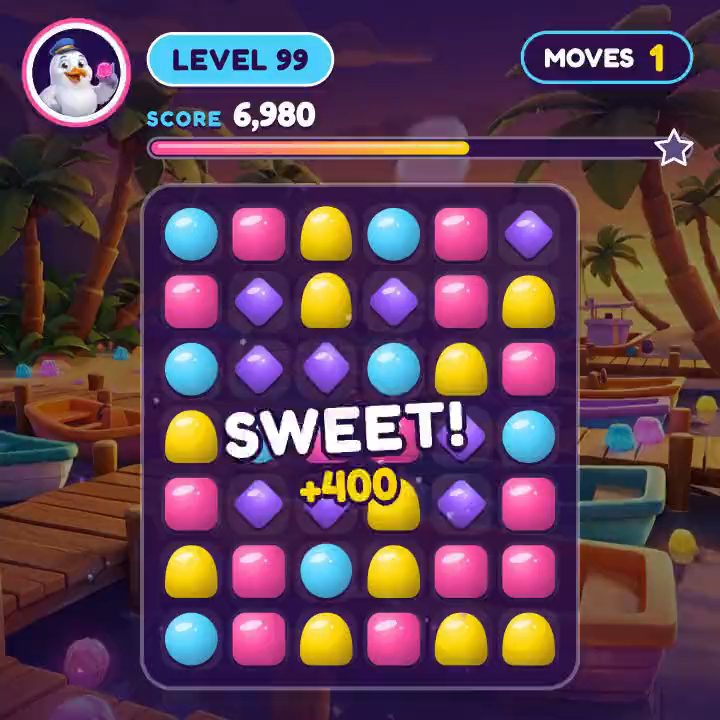
The gameplay capture, trailers and key art come in as they are, and the ad is built on top: the opening, the offer, the end card and the copy in every language. The gameplay stays exactly as captured, so players see the game they'll download. That has become a regulatory question as well as a retention one: on 4 November 2026 the UK's ASA banned install ads from King, Scopely and the publisher of Dark War Survival for showing things players wouldn't find in the game (MobileGamer.biz). What holds up is an AI-made opening in front of real gameplay, the pattern AppMagic found in Match Factory! and Idle Lumber Empire (install ads from your own gameplay).
Other tools take a different route. Link-to-video tools build an ad from a store page. Sett runs agents that research the game, make concepts and learn inside Sett. Layer covers game art, stills and playables, and its Video Editor node assembles finished videos. With Motn the studio's own team makes the ads, from its own footage, on one canvas, and keeps the reasoning where it can read it.
More openings on the same gameplay
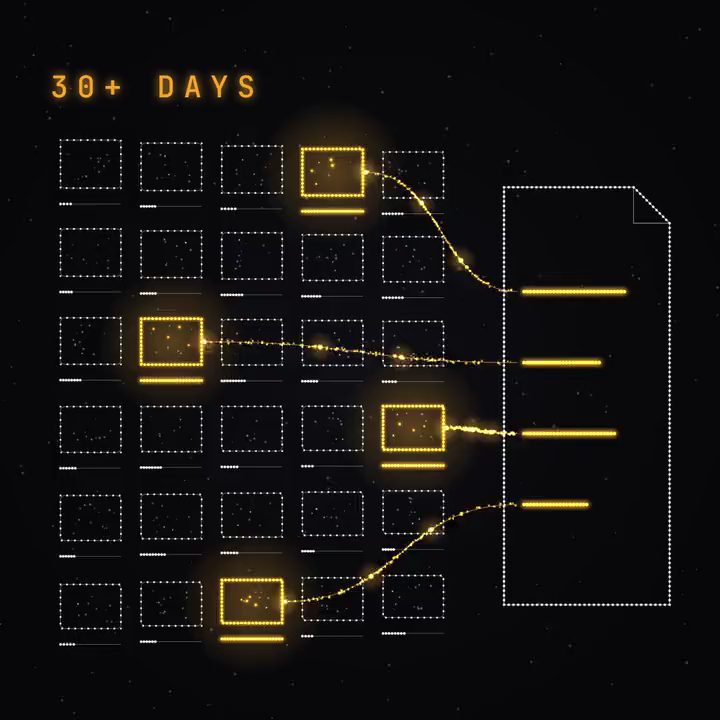
The cheapest gains come from testing many openings on an ad that already works. One approved ad can get as many openings as the test needs, a failed level, a satisfying sort, an "Only 1% solve this" challenge, a Halloween reveal, or a real player's hand on the screen filmed on the actual game, each a finished ad in every size with every frame after the opening identical. The ad network picks the winner with real spend. The research for those openings sits on the same canvas, with the Meta Ad Library showing ads that have run in the genre for 30 days or more (testing wide, the Ad Library on the canvas).
Every live-ops event from the same workflow
Over 90% of the top-grossing 100 iOS games run seasonal events, mostly reskins of mechanics players know (GameRefinery), and the ads can follow the same logic, as on that Monday after Halloween. There's no new brief and no new approval of what was already approved. The refresh calendar lays out Q1 2027 event by event.
Licensed characters stay as the licensor signed them off
ZiMAD reported CTR up 40% and conversion up 20% in some channels after bringing licensed IP into its ads, and slower marketing because every creative needed the licensor's approval (MAF). Licensed art and approved footage are placed, not generated again, so only what sits on top changes: the headline, the offer, the end card, the language. The art in a new size or market is the art the licensor already approved (more versions from approved art).
Coin packs, word boards and other genre jobs
Social casino. The coin pack or free-coin offer changes every week over the same win footage. The offer is entered once and goes into every size and language (Motn for offer-driven apps).
Word and trivia. The letters are the gameplay, so animated type is the main visual, kept as live code so it stays sharp and runs on each language's own word list (when the words are the ad).
Publishers going West. Every new market is a translation, and the text inside the video is translated with the layout reflowing for each language.
Video and motion today, playables next
Motn makes video and motion ads for Meta, TikTok, YouTube and the video placements of ad networks, including the lead-in videos Meta requires for playables. Simple playables for small studios are coming. If playables carry a big part of your mix today, keep your playable vendor for them and use Motn for video (video ads vs playable ads).
Built for the whole UA team
Up to 15 people share one plan and one credit balance, and seats are free, so the UA manager, the creative strategist, the artist and the localization lead all work on the same canvas. Credits are spent only on generating; editing, previews and storage cost nothing.
Compare Motn with tools you may already use in Motn vs Layer and Motn vs Sett, or read the FAQ. Book a demo to see your own gameplay become this week's batch.