In a word game the letters are the product, and in a music game the beat is. So the ad is mostly animated type: letters dropping onto a board, a word lighting up as it's found, a lyric landing on the beat. Generated video is the wrong tool for it, because video models still get one on-screen word in four wrong at best (AI Weekly), and a word-game ad with a misspelled word is a broken ad.
Two leaders, one board
AppGrowing's August 2026 read of the category found that Wordscapes and Words of Wonders both use gameplay recordings with a letter wheel as their core proof, and differ only in the opening. Wordscapes leads with human questions, confessions and brain-age challenges. Words of Wonders leads with authority warnings, landmark visuals and difficulty promises (AppGrowing). Both ran more ads that month on fewer creatives, so each creative is carrying more placements and markets.
Playturbo's May 2026 guidance for the genre says the same thing from the other side: top video ads avoid elaborate storytelling, keep attention on the grid, show the swipe, set the rules in the first seconds and place the call to action just before a level completes (Playturbo). A word-game ad is two layers: the real board, and type and motion on top that frame it. Both have to be exact.
Three moves
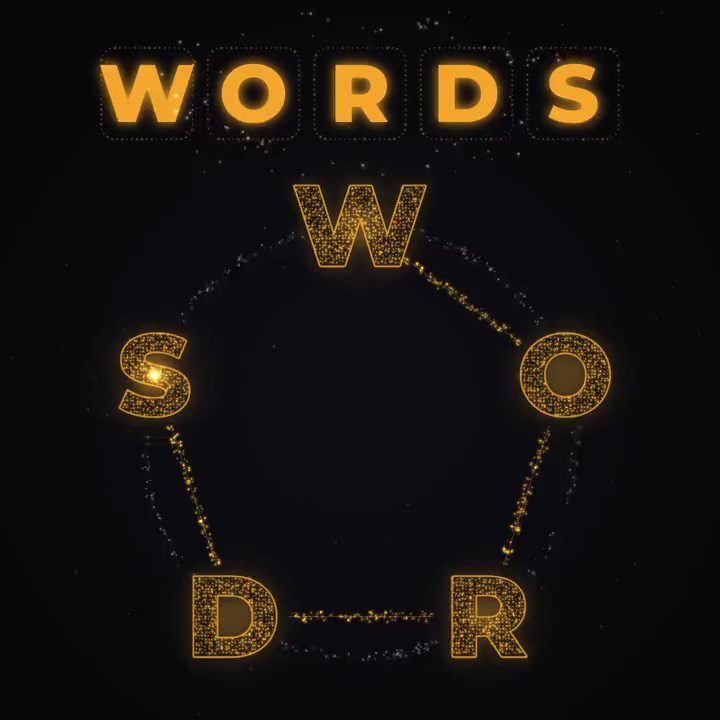
The word reveal. A word assembles letter by letter, often after a near miss, so the viewer reads it a beat before it completes.
The letter puzzle. Letters sit on a wheel or grid, a finger swipes through them, and the board fills as each word lands.
The lyric on the beat. The line appears on the beat of the song the game is built around, so the viewer hears the track and reads it at once. Apple's muted store surfaces, added in October 2026, make this harder for music games: a silent loop has to show the beat in the type.
Type as code
Each move can be built so the words stay words. In Motn each is motion code with the letters kept as text. Change the word, and the reveal runs on the new letters with the same timing and easing. Change the puzzle, and the wheel shows the new letters and the swipe draws the new path. For a lyric ad the track sits on the timeline and each line is timed to it, so a new song means new lines on new beats, not a new animation. Real gameplay goes underneath as footage (why your own footage beats a generated ad), and the letters on top are exactly the letters the team typed, at any size from 9:16 to 16:9.
Why a word ad can't just be translated
A word puzzle doesn't survive translation. Its letters were chosen to make certain words in one language, and in another the same set can change the difficulty or spell words nobody intended, which is why word games load a separate, checked word list for each language (Crowdin Community). The ad has to follow the game: a German ad shows a German puzzle from the German word list, not the English puzzle with German labels.
The scripts add their own problems. Arabic letters change form depending on their position in the word, Japanese has characters that must not start or end a line, and Chinese packs a lot into each character, so text that reads easily in English can be dense at the same size. A letter animation that assumed English letter widths breaks in all three.
So the team supplies the words for each market from the game's own word lists, and the animation runs on them, with the layout reflowing for each script. Before a market goes live, a person who reads the language watches the ad (the QA checklist). The wider case is in localizing video ads is more than translation.
Start with your best-performing reveal or puzzle ad and rebuild it for your second-largest language, using a real puzzle from that language's word list. More for word, puzzle and music studios is in Motn for games.