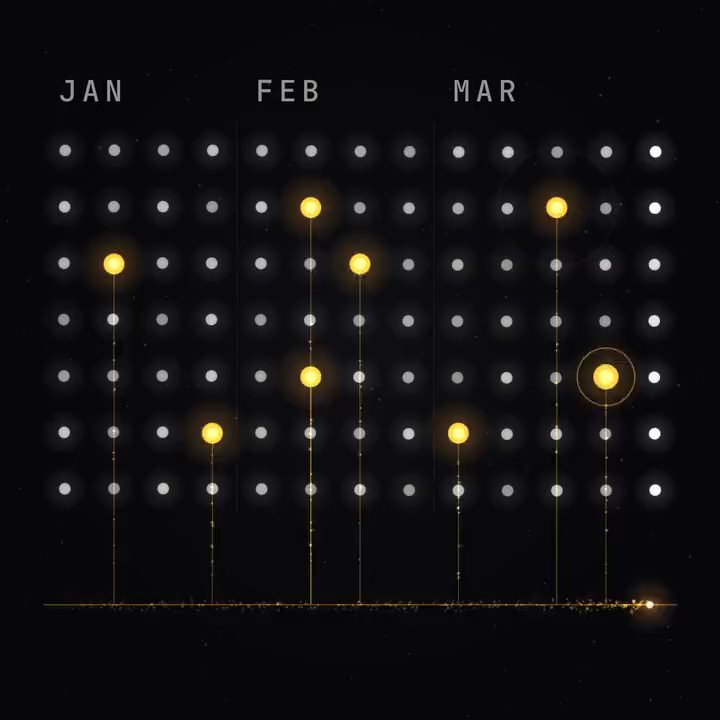
Between 6 and 14 February 2027, three events land for three different audiences. Lunar New Year falls on 6 February, for players in China, Taiwan, Korea, Vietnam and Singapore. Ramadan begins on 7 February, for players from Saudi Arabia to Indonesia. Valentine's Day is on the 14th, for the US and Europe (ADL). That's three batches of event ads due in the same nine days, in Chinese, Korean, Vietnamese, Arabic, Turkish, Indonesian, Malay and every European language, on top of the usual weekly refresh.
A team that runs each event as its own project falls behind somewhere in that stretch, and most games run them: over 90% of the top-grossing 100 iOS games run seasonal events (GameRefinery), and the first quarter has eight worth an ad.
What changes for each event, and what stays
Games already solve this inside the product. Most seasonal events reuse a mechanic players know and dress it for the occasion: Royal Match gave its Endless Treasure bundle a Christmas reskin, and Monopoly GO! turned an existing event into a Valentine's Partner event (GameRefinery). The best UA teams carry the same logic into their ads. AppMagic found Toy Blast, Angry Birds Dream Blast and Merge Restyle putting live-ops content straight into ad creative, with no new content made for each campaign (AppMagic).
Three things change from one event to the next. The theme: the event art, the colours, the music and the seasonal props. The offer: a new bundle, a discount or a battle pass. And often the opening, because an event gives the ad a new first frame, the first egg found or the red envelope opening. Everything else in an event ad is something the team has already decided: how the gameplay is captured and cut, how long the opening runs, the logo, the end card, the legal line, and the layout and languages for each placement and market.
The split matters because of where approvals go. If every event ad starts from a new brief, the brand lead, legal and the UA lead review the whole ad eight times a quarter. If only the theme, the offer and the opening are new, that's all they review.
Q1 2027, event by event
Dates are from the ADL 2027 calendar of observances. Pick the events your players celebrate: a game that's small in the Middle East can skip Ramadan, and one that's big in India shouldn't skip Holi.
| Ramadan | 7 Feb – 8 Mar | Saudi Arabia, UAE, Egypt, Turkey, Indonesia, Malaysia | Night-time art, offers timed for the evening, Arabic text with right-to-left layouts, plus Turkish, Indonesian and Malay text |
How other tools handle it
Layer's Workflows let a team wire generation and editing steps on a canvas and publish them, so teammates pick inputs and run them without opening the canvas (Layer), and Live Play Mobile used Layer to cut the production of an event's collectible art from about four days to one (Layer). Sett answers each refresh with new concepts produced through its agents. Both are fast. In neither do the people running the refresh see and change every step of the finished video ad.
Running the quarter on one workflow
Start from the ad the team trusts most, usually the best-performing batch of the last month. Make it once in Motn, from the gameplay capture through the opening, the logo, the end card, the legal line, every placement and every language, and save the canvas. That's the workflow for the quarter, and it's approved once.
For each event the team brings three things: the event art, whether the art team made it or it was generated in the game's style from the brand library; the event's offer; and the moment the opening should start on. Motn rewrites the prompts for the new theme and sets the steps up again, and the team reviews each step and picks the takes, as it did for the first batch. The offer is typed once and goes into every version, as in a new offer in every version. The review covers what's new.
February becomes three runs of the same workflow with three sets of material. Lunar New Year gets Chinese, Korean and Vietnamese text; Ramadan gets Arabic with right-to-left layouts plus Turkish, Indonesian and Malay; Valentine's Day gets the English and European versions, each laid out for every placement. Each still needs a check before it goes live, but none needs a new brief.
Fixes travel forward. If the New Year batch shows that the opening works better at two seconds than three, or that the logo reads better lower in 9:16, the fix goes into the workflow, and Holi and Easter start with it.
Planning the quarter
Choose the events by audience. Go through the table with your market split open and keep the events where you have players. Each event you keep is a batch, so eight is a lot for a small team, and three well-chosen ones may do more.
Approve the workflow in the quiet week before New Year, from your best current ad, so the quarter starts from something the brand lead, legal and the UA lead have already signed off.
Collect each event's material two weeks ahead: the art from the game team, the offer from monetization and the start date from live ops. A batch can only go out when its material is in.
Plan February as one push, with reviewers for the selected languages lined up before the end of January.
Put each batch's end date next to its start. A Valentine's ad running in March tells players nobody is looking after the game.
More on live-ops ads, from event art to licensed characters, is in Motn for games, or book a demo.