BlogWeekly refresh
The weekly creative refreshhow UA teams keep ads fresh without rebuilding them
6 min read
Coming soonThe Meta Ad Library on the canvas is coming soon.
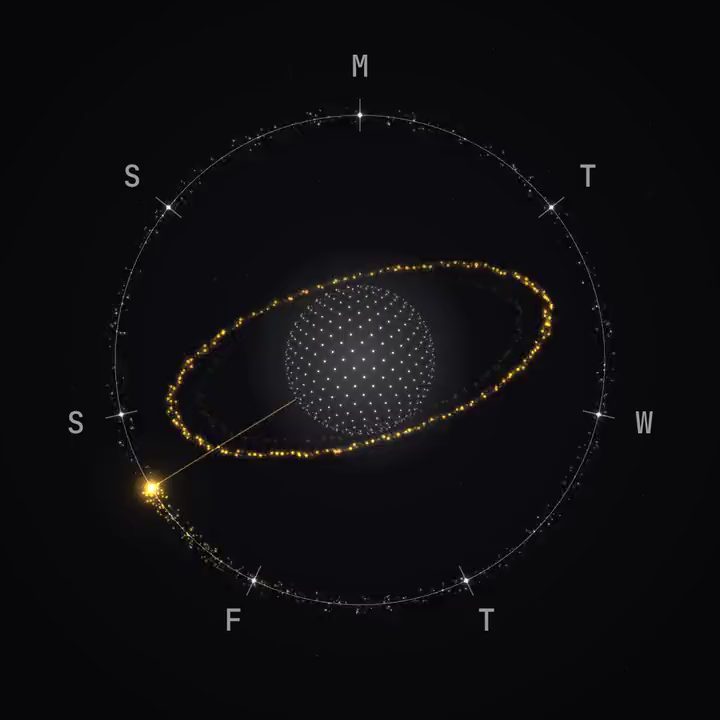
Monday, half past nine. Last week's numbers are in, spread across AppLovin, Unity, Mintegral, ironSource and Meta, each with its own dashboard and no shared way of naming what was in each ad. Someone on the team will spend a good part of the day tagging creatives by hand, which across a week can come to 20 hours (Segwise). By the time it's done, the result is late for the brief it should have shaped.
This is the week every UA team for a game or an app lives on repeat. A creative's best stretch on Meta and TikTok often lasts one to three weeks (Admiral Media), so something new has to go out every week. In an account published by Matej Lancaric, one UA lead moved from one refresh a week to two or three on Facebook and TikTok, because "refresh frequency matters more than raw volume" (Matej Lancaric).
The week has two tracks running at once. RocketShip HQ's Shamanth Rao separates new concepts, meaning new reasons to install, from variations, meaning new hooks or lines on an ad that already works: "You need both every week, and you should count them separately." He also warns that "variant production does not disguise a lack of new ideas" (RocketShip HQ). The teams that win spend their hours on the next concept and as few as possible on the variations around it. Here is where those hours go, day by day.
Monday and Tuesday: reading results and the market
Without a test log, the same test gets rerun months apart (Billo). Rao's rule is to "name and store every ad so you can compare concepts, variants and results". Tuesday adds the market: ad libraries, competitors' store pages and the game itself.
AI tools split three ways here. Analytics tools such as Segwise tag creatives and tie them to performance. Layer's connectors read network reports so its agent can plan the next batch. Sett runs agents that read network, attribution and competitor data, decide what to make and learn from the results inside Sett.
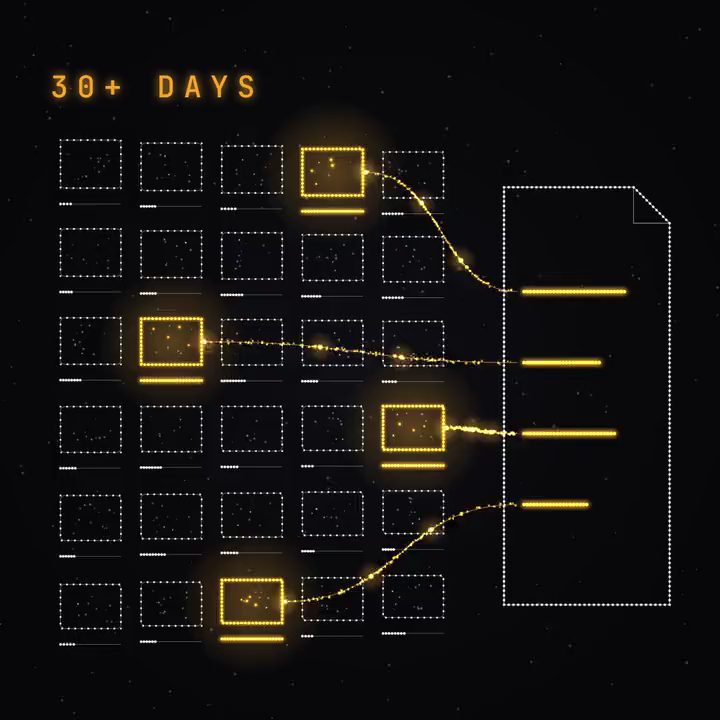
Motn doesn't replace the measurement partner, and it doesn't decide what to make. What it changes is where the research and the record live. The Meta Ad Library sits on the same canvas as the team's ads, showing ads that have run in the category for 30 days or more, so Tuesday's scan turns straight into Wednesday's work (the Ad Library on the canvas). Every opening the team has made stays in the step that produced it, and the winners go into the shared library. Beside each tested opening the team keeps the result and its reading of it: where it ran, what it was compared with, which metric decided it, and what to carry into the next brief.
Wednesday: the brief
Two or three concept briefs and several variation briefs a week is a lot of writing, and in small teams production deadlines squeeze it out. Then the briefs have to travel: written in Notion, the creator booked in Slack, the asset back through Frame.io, and a media buyer pulling the file from a Dropbox link two days late.
Some AI tools skip the brief: link-to-video tools build an ad from a store page, and agent services write their own briefs from your data. Both are fast, and both leave out what the team knows about the game. The early evidence favours the brief. In a preliminary Google Display Network study cited by Liftoff, ads AI generated from briefs written by people beat ads made by human experts alone by 19% in click-through (Liftoff).
So the concept brief stays the team's job; a new reason to install is a call AI shouldn't make. The variation brief is what changes. After the first week, it isn't a document at all. It's a change to the canvas the ad was built on: a new opening, a new end card, a new offer. Everything the first brief settled, from the look to the model used for each shot, is already in the steps.
Thursday: making the variations
Variations come from the parts of an ad that works: the hook in the first five seconds, the gameplay section and its order, the ending, the call to action, the captions for sound-off viewing, the length and the pacing (AppAgent). Done by hand, each is an editing job in After Effects, Premiere or CapCut. Done by generating, each comes back as a new clip that may have drifted from the real gameplay, and generating again to change one part changes the parts that were already right.
On the canvas, the parts of the ad are the steps. The opening is one step and the gameplay section another, and the end card and call to action sit on top as live text and motion graphics. To make a variation the team changes one step, gets several takes side by side and keeps one, and the rest of the ad stays as it was. That gives practitioners the one-variable test they ask for; testing openings before you commit spend sets it up.
The base is the game itself. Gameplay capture and screen recordings come in as footage, and the openings, offers and end cards go on top, so the ad shows the game players will download. In November the ASA banned install ads from King and Scopely for showing things players wouldn't find (MobileGamer.biz), which is the risk behind install ads from your own gameplay. Teams whose mix leans on playables should keep their playable vendor for now: Motn makes video and motion ads.
Thursday afternoon: every size, language and offer
A variation that wins has to exist in every orientation, in each network's export, in every language, and for apps with weekly prices, with this week's offer. Each of those is a version someone makes and checks. Design tools resize static designs, dubbing tools translate the voice, feed tools like Bannerflow and Smartly update prices in catalogue templates, and generative tools remake the whole ad for each version.
Built from one approved ad, the versions come out of the same run: each size laid out for its frame, the text inside the video translated and reflowed, and the offer entered once for every size and language while the footage stays as it is. Five placements, five languages and four openings make 100 finished ads, and they reach review together rather than market by market. Every ad, everywhere, all at once follows one of them through.
Friday: review, and what was learned
Every variation goes back to the strategist against its brief, and anything with a price, an age limit or a disclaimer goes to legal. With generated versions nobody can be sure what else moved, so each is watched from the first frame, and at 100 versions a week the review becomes the slowest step of the refresh.
When the approved footage isn't generated again for any version, the review covers only what's different in each: the layout of a new size, the wording in a new language, the new opening or offer. Legal lines stay word for word. The review happens on the live canvas, and anyone who has to sign off can join, since seats are free for up to 15 people on one plan.
Week two
The first week builds the ad from brief number one, like any other week. The difference shows on the second Monday. The canvas from week one is saved as a workflow, and each step has kept its prompt, its model, the material it started from and the take the team chose. This week's event art, offer or opening idea goes in; Motn rewrites the prompts and sets the steps up again; the team checks each one. The opening that won last week leads this week's test, and every fix from last week is already there. Don't rebuild. Build on explains why that matters more than speed.
So the second week starts where the first ended, and the hours go to the one part of the refresh only the team can do, the next concept. A quarter of live-ops events planned this way is in the refresh calendar.
Start with the ad your team refreshes most often, the live-ops event ad, the weekly offer ad or the top campaign's hero video. Build it from this week's brief and run next week's refresh through it. Book a demo and bring this week's gameplay.