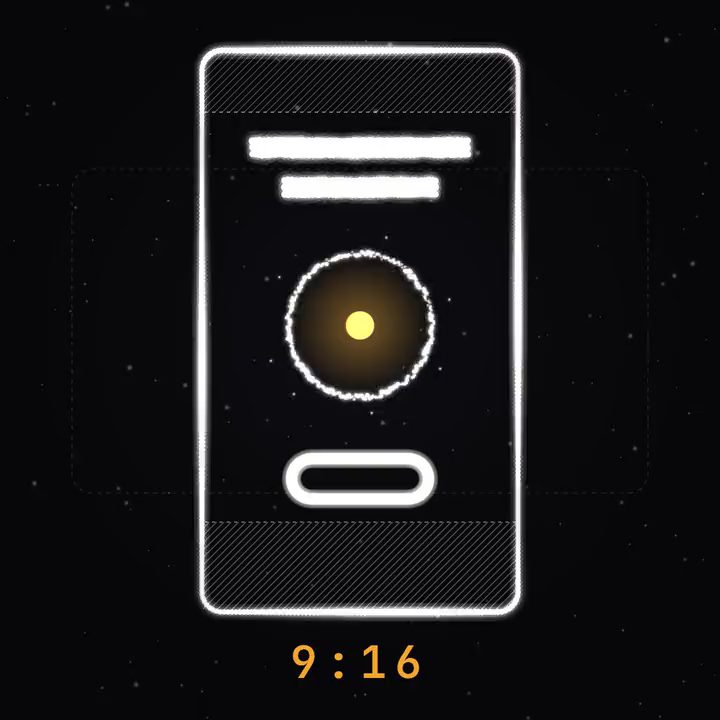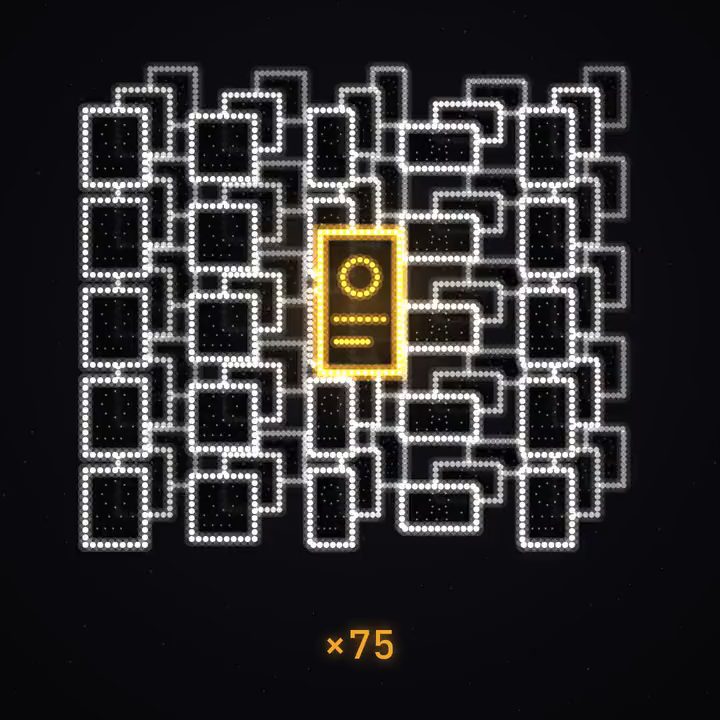
A meal-planning app has one ad that works. To run it properly it needs five placements: Reels, Stories, TikTok, the feed, and YouTube with connected TV. Between them they take four shapes: 9:16, 4:5, 1:1 and 16:9. It sells in five languages. And it speaks to three audiences, so it needs three offers: 50% off for new users, a free week for lapsed ones and a bundle for families. Five times five times three is 75 versions of one ad, and the ad will only keep working for a few weeks.
Seventy-five is a modest number. It's the arithmetic every team selling in more than one market runs into, and why the numbers got this big is its own story. What follows is how the 75 get made from one approved ad, which we call the master, in one run of one brief.
Follow one of them: the German version, for lapsed users, in 9:16.
The shape
Say the master was cut in 4:5. For Reels it isn't cropped to 9:16; it's laid out again. The footage is framed for the taller shape with the food kept in view, and the headline, the offer, the logo and the end card move and scale so that none of them sits under the platform's caption or its buttons. In 16:9 the same elements spread out; in 1:1 they tighten. What a crop breaks, and how the layout is rebuilt instead, is in laying out one ad for every placement.
The app stores ask for their own shapes too. Since October 2026 the App Store also takes a 21:9 header video and a silent 3:2 search video (MobileAction), and store previews are built from the app's real screens rather than from the ad.
The language
German runs long. The headline that fits on two lines in English needs three, so the layout reflows around it rather than shrinking the type until it can't be read at phone size. The same happens when a language reads right to left, like Arabic, or uses another script, like Japanese.
The words that change are the ones people read first: the headline, the offer, the call to action, the end card, any interface label on screen. They're also the ones Meta's AI dubbing leaves in English, since it replaces the audio and keeps the frames (Digital Applied). The disclaimer goes in exactly as legal approved the German wording. Someone who reads German still signs it off before it goes live; the QA checklist covers what they should look at.
The offer
Lapsed users get a free week. The offer is entered once, as an offer, and goes into every shape and language that audience sees, in each market's own wording. Next week it may be a different offer; changing it doesn't mean remaking the video.
The lapsed-user version can also get its own opening. The first seconds that stop a new user aren't the ones that bring someone back, so each audience can have a different opening on the same approved ad, each one a finished ad.
The other 74
Nothing about the German, lapsed-user, 9:16 version was made by hand, and nothing about it waited for the others. Placements, languages and offers are all built from the master in the same run, so the 9:16 cut doesn't queue in front of the German end card. The versions are produced in the same run and go to review together, instead of market by market over the following weeks.
What stayed the same
In all 75 the footage is the footage the team approved. Apart from an opening someone chose to test, Motn doesn't generate it again to make a version. What changes is the layout and everything on top of the footage, which stays live text and motion graphics. That's why the footage is approved once, and why each version gets a short check of what changed in it: the offer, the translation, the layout and any new opening.
When something is wrong, the fix is an edit, made once and carried into every version, as fixing an ad without regenerating it explains. To watch one master turn into its versions on your own footage, start with the $10 Try pack or book a demo.