A template is the fastest way to a first motion ad, and it's also why so many motion ads look alike. Every team on a platform starts from the same logo reveal and the same kinetic type, swaps in its colours and ships something a viewer has seen in three other feeds that week. AI is pushing the same way: in the IPA's September 2026 issue, Sara Chapman of adam&eve\TBWA warned of "creative collapse" as models trained on AI-made work drift toward the average (IPA). The template saved a day, and the ad carries someone else's look.
None of that is an argument against starting points. It's an argument for not finishing on one.
Making a starting point fit the brand
Motn's starting points come from Motn and from the community. They're the pieces most motion ads are built from: logo reveals, kinetic type, animated backgrounds, data animations such as counters and charts, and shader effects. Each opens on the team's canvas as live code, with controls for its timing, easing, colours and text, inside the team's brand library, so the brand's fonts, colours and logo replace the template's straight away.
The rest is a designer's call. The template's motion may be too bouncy for a bank or too slow for a game, so the designer sets the easing and durations to match how the brand moves. A kinetic type layout built for one-word headlines may need to carry a price and a claim, so the layout and hierarchy change. A data animation gets connected to real numbers instead of sample ones, as in numbers that stay right. When the senior designer does this once, juniors don't have to (the senior designer's decisions, built in).
Saving it as the team's workflow
Once the starting point looks and moves like the brand, build the first real ad on it and save the canvas. It's now a workflow with the team's choices in every step: the adapted motion, the layout and the prompts that produced the shots. The next brief goes through it with new material, and the steps are set up again for the team to check.
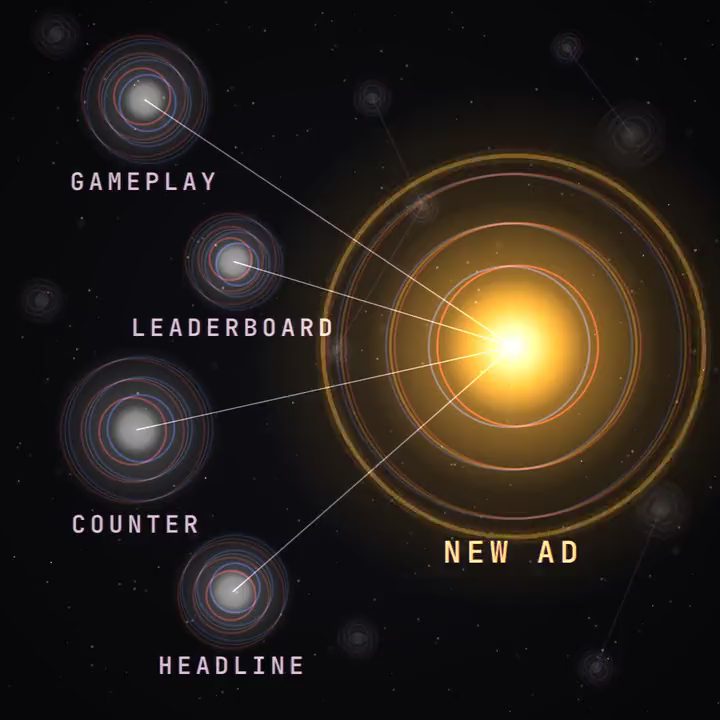
From then on the template is history. Every fix goes into the team's own workflow, and every part that works can go into the shared library and into other ads, as in connecting the nodes. Six months later the team's ads still started from a template, and nobody could tell which. That's the argument of Don't rebuild. Build on in its smallest form. Try it with the $10 Try pack.